
"arabica roots"
1000 article(s) found

Diamond Manor in Huilan area of Colombia specially treats MAM area
The history of Colombian coffee dates back to 1808. A priest brought coffee to Colombia for the first time from the French Antilles via Venezuela. The suitable climate in Colombia provides a real natural pasture for coffee. Since then, coffee trees have taken root in this country. The country has also become the second largest coffee producer after Brazil and the largest Elaraby in the world.

Description of taste and flavor of Katim coffee beans introduction of varieties produced by grinding scale
Katim coffee beans taste description grinding scale taste production area variety introduction Katim, as a variety that has taken root in Yunnan, I love and hate it. Although it has many shortcomings and is not suitable for planting at high altitude at all, there is still a lot of room for improvement and it has become better and better. How to discover more of its advantages and make use of them

What are the "what" in the coffee?
What is caffeine? Caffeine is a substance found in the leaves, roots and fruits of 100 plants in nature. it is also a mixture of methylxanthine. Caffeine usually comes from coffee, dimethoate and tea. Caffeine is also used in energy drinks and drugs to treat colds and flu. Coffee and tea also contain other dimethylxanthine theophylline. Tea

What are the "what" in the coffee?
What is caffeine? Caffeine is a substance found in the leaves, roots and fruits of 100 plants in nature. it is also a mixture of methylxanthine. Caffeine usually comes from coffee, dimethoate and tea. Caffeine is also used in energy drinks and drugs to treat colds and flu. Coffee and tea also contain other dimethylxanthine theophylline. Tea

What is the difference between coffee and coffee beans?
In fact, the word robert comes from the most widely grown variety of carnivora coffee. Robbett is a very strong shrub or small tree, more than 10 meters tall, but its roots are shallow. The fruit is round and matures for 11 months. The seeds are oval and smaller than arabica beans. in Midwest Africa, all of Southeast Asia, and in a region of Brazil called Conilon.

Cultivation of Coffee Tree Seedling how to raise Coffee Tree
Tree name: coffee family: the morphological characteristics of evergreen trees of the subgenus Rubiaceae Coffee is a perennial evergreen shrub or small tree of Rubiaceae. It is a horticultural perennial cash crop with the characteristics of fast growth, high yield, high value and wide market. Wild coffee trees can grow up to 5 to 10 meters tall, but coffee trees planted on the manor, in order to increase fruit and facilitate harvesting
Answers to various questions about coffee
What is caffeine? Caffeine is a substance found in leaves, roots and unattractive fruits that naturally compete for 100 kinds of plants. it is also a group of methylxanthine assimilates. Caffeine generally comes from coffee, cola and tea. Caffeine is also used in energy drinks and drugs to treat colds and flu. Coffee and tea also contain other dimethyl xanthine teas
About Coffee History Origin Culture and Spread
Coffee tree, is a tropical plant, evergreen shrubs, growing in the equator, north and south latitude 25 degrees each, that is, within the Tropic of Cancer region. The tropical tropics and the equator are the world coffee growing belt. The growing conditions require abundant rainfall and humid climate. The suitable altitude is about 600~1500 meters. The annual rainfall is 1500~2000 mm. Mild days alternate with cool nights.

Map of Coffee World (Preface)
Professional baristas Please follow the people who used to be in the coffee shop (official Wechat account cafe_style) who believed that the earth was flat: the world had an end, and if you sailed there, you would fall into the abyss with a waterfall. This set of ideas is intermingled with superstition, religion and fantasy. It was not until the scientific knowledge matured that people gradually accepted that they had lived on the sphere for generations. Overthrow coffee is bitter

How many varieties of coffee beans are there in the world
There are more than 70 kinds of coffee in the world, of which 3 are mainly cultivated in China. ① small seed species, also known as Arabica coffee, is native to Ethiopia and is cultivated in Taiwan, Fujian, Guangdong, Guangxi, Yunnan and Sichuan. Shrub, 4-6 m tall, with many branches in the basal part; leaves thinly leathery, ovate-lanceolate or lanceolate, entire or undulate, terminal bud green or bronzed, so

How many varieties of coffee beans are there in the world
There are more than 70 kinds of coffee in the world, of which 3 are mainly cultivated in China. ① small seed species, also known as Arabica coffee, is native to Ethiopia and is cultivated in Taiwan, Fujian, Guangdong, Guangxi, Yunnan and Sichuan. Shrub, 4-6 m tall, with many branches in the basal part; leaves thinly leathery, ovate-lanceolate or lanceolate, entire or undulate, terminal bud green or bronzed, so
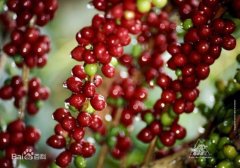
Colombia Huilan Region Vera Plateau Colombia Coffee Flavor
Colombia coffee dates back to 1808. Coffee was first brought to Colombia by a priest from the French Antilles via Venezuela. Colombia's favourable climate provides coffee with a truly natural pasture. Since then, coffee trees have taken root in this country. The country also became the second largest coffee producer after Brazil and the world's largest Arabica coffee producer.

A brief introduction to the Market Price of Robusta Coffee Bean varieties
Its caffeine content is much higher than that of Arabica species, which is about 3.2%. Arabica coffee beans grow at colder high elevations in the tropics, which is not suitable for Arabica species. Robustadow is grown in lowlands 200-600m above sea level. He prefers a warm climate and requires a temperature of 2429 ℃ for rainfall.
A few "what is" in boutique coffee?
What is caffeine? Caffeine is a substance found in the leaves, roots and fruits of 100 plants in nature. it is also a mixture of methylxanthine. Caffeine usually comes from coffee, dimethoate and tea. Caffeine is also used in energy drinks and drugs to treat colds and flu. Coffee and tea also contain other dimethylxanthine theophylline. Tea

Where is the largest coffee producing area? Altura Coffee, Mexico
Soil conditions are also crucial. Coffee trees belong to shallow root plants, and the soil is rich in organic matter (with strong fertility), rich in water vapor (and smooth drainage), deep soil layer (usually above lm) and weakly acidic (the soil pH value of coffee planting in Yunnan, China is generally between 5.5 and 6.5). Guatemala, Brazil, Colombia, and Xavier in the United States

What is the taste of Yunnan small-grain coffee | which Yunnan small-grain coffee tastes good and how does it taste?
Professional coffee knowledge exchange more coffee bean information please follow the coffee workshop (Wechat official account cafe_style) after 1886, a large number of British, French, American, Italian and German missionaries entered western Yunnan. In 1892, French missionary Tian Deneng came to Zhukula Village in Binchuan, Dali for missionary activities. The first coffee seed took root in Zhukula, and the Godfather Tian taught the local villagers.

To learn the theoretical knowledge of coffee beans, coffee colleges open cafes to learn coffee blending.
Boutique coffee is fresh coffee. Whether it's food or drink, of course, the fresh the better, and so is boutique coffee. High-quality coffee should keep the coffee beans fresh before making, including the preservation of baked beans, and grind the coffee beans into powder before making, which is also to retain its original and best flavor. And the way of making hand-made coffee is such a way to make high-quality coffee.

Difference between Ugandan robusta coffee beans and Arabica beans _ classification of Ugandan coffee beans
Professional coffee knowledge exchange more coffee bean information please pay attention to the coffee workshop (Wechat official account cafe_style) "Arabica" vs. "Robsta" Arabica v.s Arabica beans are longer and oval in the middle of the split line narrow and tortuous. Romstadou is more circular in the middle of the split line crack into a straight line. Robustas Romsta coffee c

Coffee planting zone and climate coffee tree planting environment and coffee growing area
Professional coffee knowledge exchange more coffee bean information Please pay attention to the coffee workshop (Wechat official account cafe_style) Coffee trees grow in the tropics between the Tropic of Cancer and the Tropic of Cancer and near the equator, also known as the world coffee growth belt, caffeine varieties and regional factors, there are also great differences in appearance. The color of leaves ranging from yellowish green to dark green or even brass.

A brief introduction to the Origin, Development, History and Culture of Robusta Coffee beans
The output of Robusta species accounts for 25% 35% of coffee bean production, and its main producing countries are in Indonesia (one of its coffee beans is a kind of coffee beans processed by washing, which is a hybrid between Robusta and Arabica. It is the only kind of coffee beans on the Chinese market that can be used as a single drink), Vietnam, Africa, (Ivory Coast, Nigeria, Angola).